
Features
Operating principle
The substrate moves continuously through the machine. A coating is applied in a uniform layer, either flat across the entire surface or precisely to specific areas, and then cooled or dried. The process also allows for the joining of several materials through lamination.
Integration
The coating machine treats the packaging material prior to its shaping and filling. It is part of the transformation stages of the substrate.
Options & configuration
Paraffin or wax coating, hot-melt, one- or two-component solvent-free adhesive, solvent-based or water-based adhesive. Flat or marked coating, lamination of multilayer materials.
Benefits
Effective barrier against water and grease.
Heat-sealing capability for the closing stages.
Glossy effect and quality of finish.
Assembly of materials by layering.
Versatility of coating types and substrates.
Coating/Paraffining Specialists
DCM ATN
Printing and converting machines for flexible packaging: gravure, flexo, coating, slitting.
Foodand beveragescosmeticspharmaceuticals
Primary packagingSecondary packagingPackaging machines
Expert images
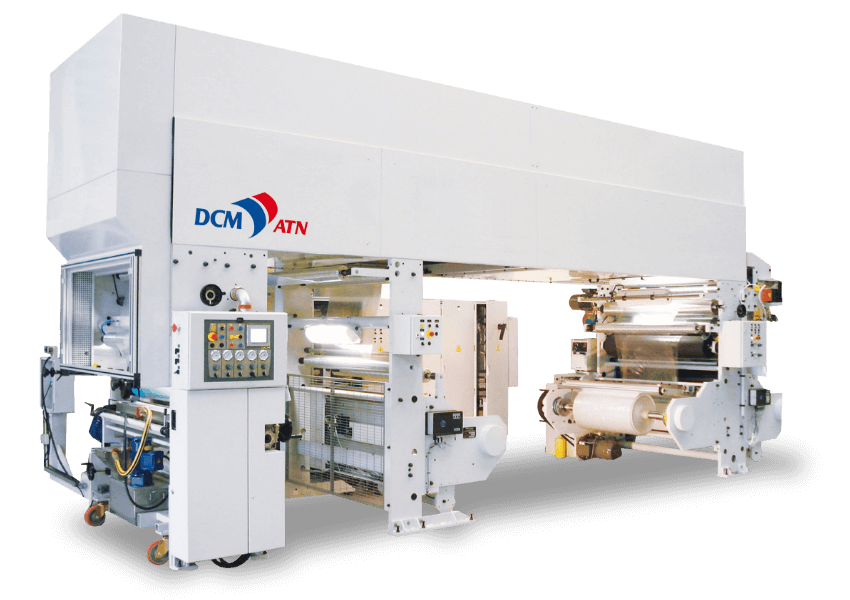
DCM ATN Paraffin Maker
FAQ.
What is the purpose of paraffin coating packaging?
It deposits a layer of paraffin or wax which makes the paper or cardboard resistant to water and grease, and sometimes gives it sealing properties.
What types of coatings can a coating specialist apply?
Paraffin, wax, hot-melt, or solvent-free, solvent-based or water-based glues, depending on the desired property.
What is the difference between flat coating and coating using a guide?
Flat coating covers the entire surface of the substrate; spot coating applies the coating only to defined areas.
What is complexing?
It is the assembly of two or more materials into a multi-layered support, in order to combine their properties, for example barrier and resistance.
What surfaces can be coated?
Mainly paper and cardboard intended for packaging, processed in continuous belts.
