
Features
Operating principle
Three main methods cover most bags. Sewing closes the bag opening with thread and is suitable for paper and woven polypropylene bags. Heat sealing welds the top, often using a heat-sealable strip for lined paper bags. Folding and gluing folds and glues the top of the bag. Easy-open systems can be integrated.
Integration
The bag sealer is positioned after the bagging machine, which fills the bag, and before the palletizing machine. The top of the bag is shaped before sealing, and then the bag is conveyed to the next stage of the line.
Options & configuration
Single or double stitching, heat sealing with heat-sealable tape, folding and gluing, easy opening system, adaptable to paper, polyethylene and woven polypropylene bags, for powders and granules.
Benefits
Sealed and clean.
Product protection and preservation.
Versatility of bag materials.
Neat presentation for stable pallets.
Continuous integration with bagging.
Easy opening option for the end user.
Bag Closure Specialists

CETEC
Complete weighing, bagging and palletizing lines for powder and granular products.
Agri-foodAnimal feedChemicals
Primary packagingSecondary packagingEnd of line
Expert images
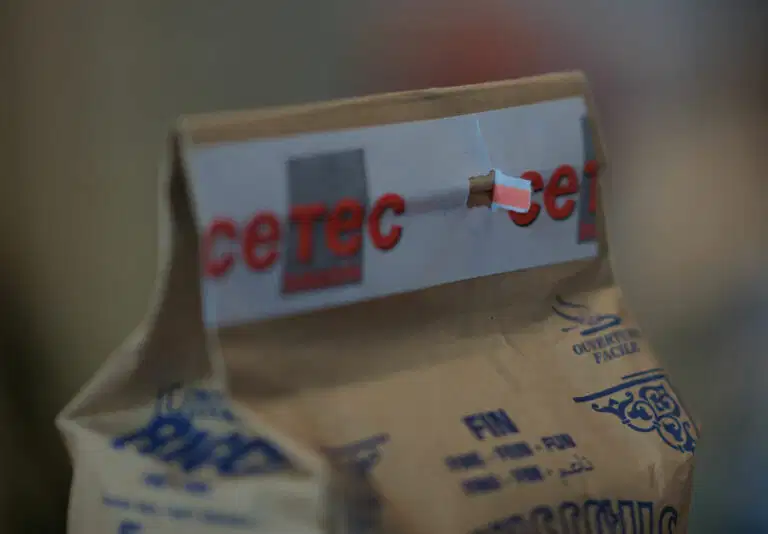
CETEC bag closure
FAQ.
What are the methods for closing a bag?
The three main methods are sewing, heat sealing, and folding and gluing. The choice depends on the bag material and the desired level of waterproofing.
Sewing or heat sealing: how to choose?
Sewing is suitable for paper and woven polypropylene bags. Heat sealing, often with a heat-sealable strip, provides a more airtight seal on lined paper or plastic bags.
Which bags can be closed?
Open-mouth bags made of paper, polyethylene or woven polypropylene, containing powders or granules.
Where is the closing machine positioned in the line?
Right after the bagging machine, which fills the bag, and before palletizing.
What is a heat-sealable tape?
It is a welded band on the upper part of the bag, which ensures a watertight seal, sometimes combined with an easy opening system.
