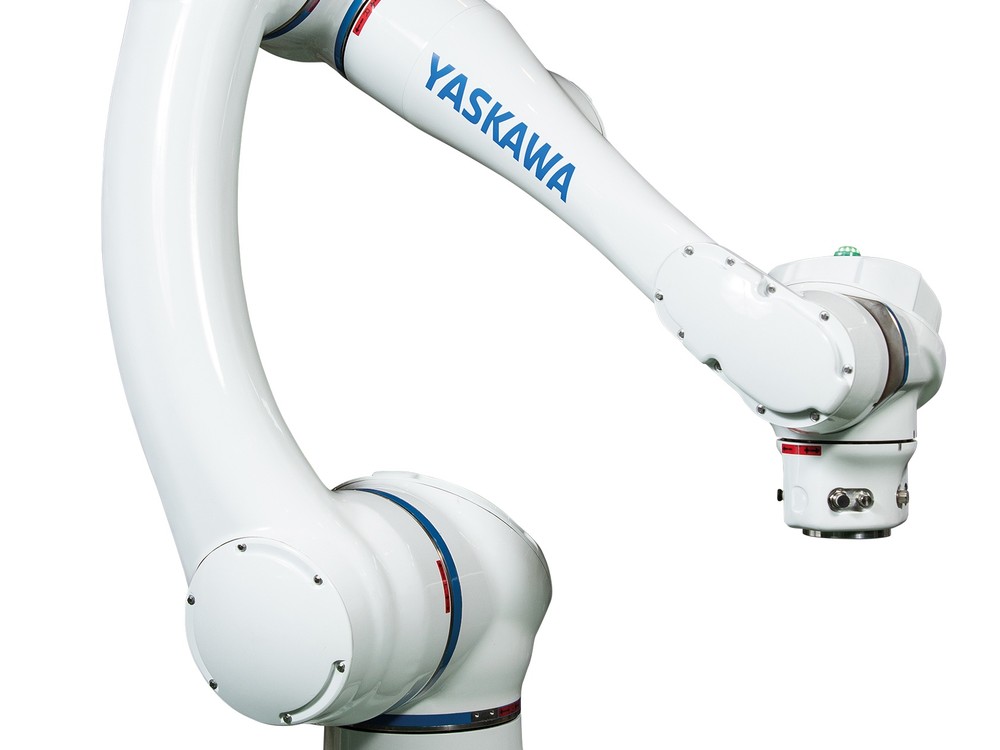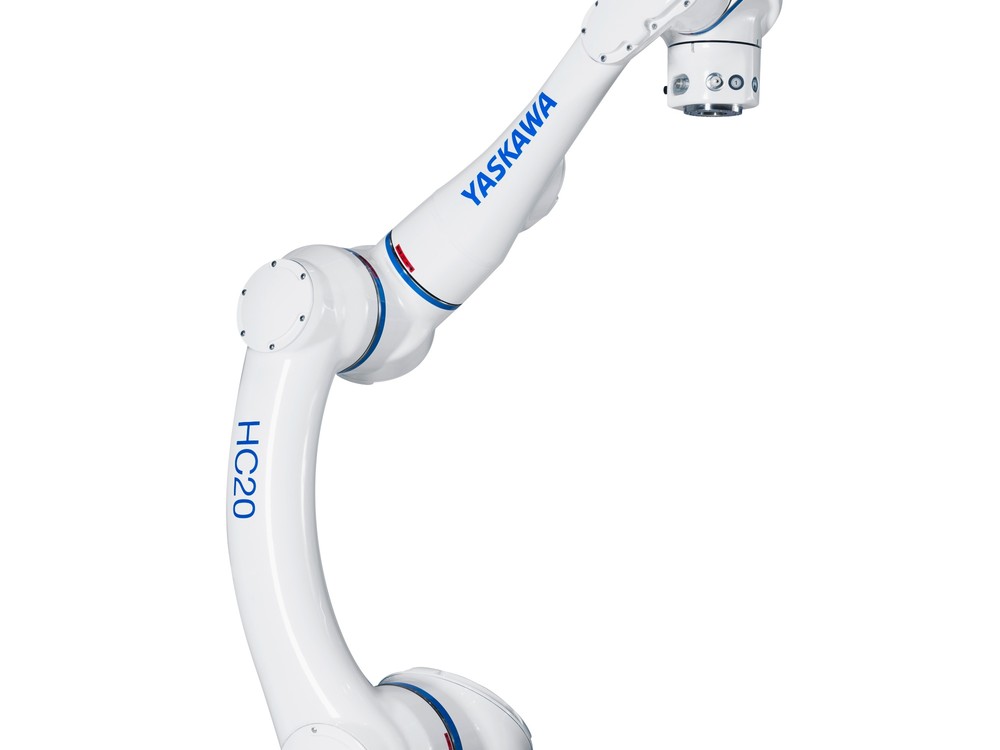


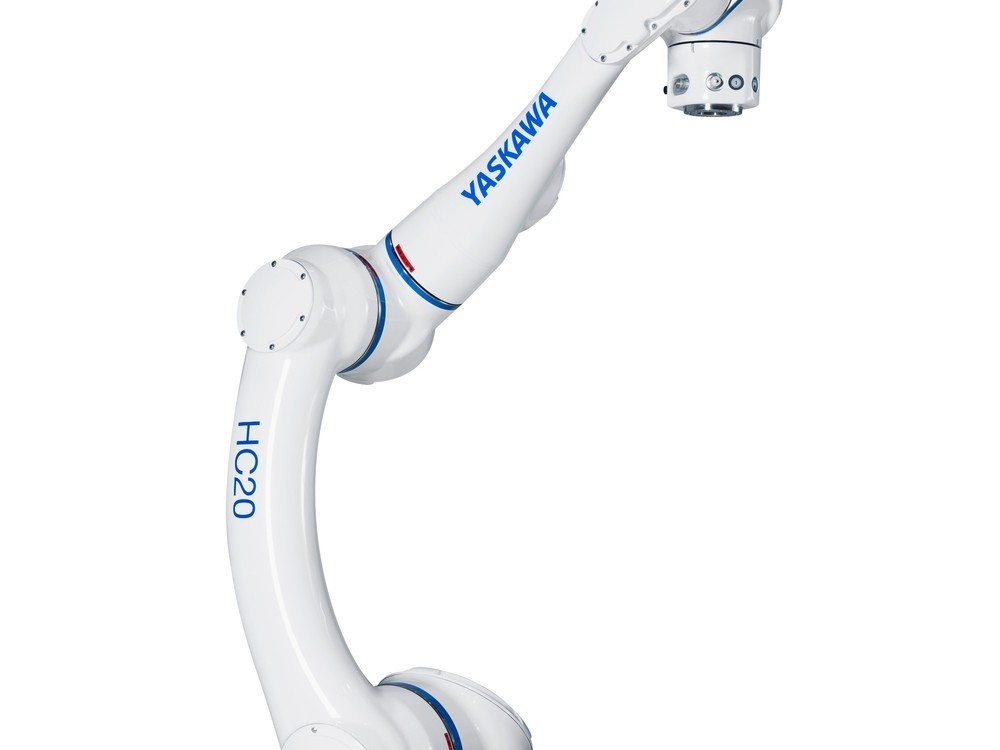
Until now, cobots were relatively small robots primarily capable of handling payloads of up to 10 kg with a reach of approximately 1200 mm. The HC20DT, designed by Yaskawa, significantly expands the range of human-robot collaboration applications: a 20 kg payload combined with a 1700 mm reach offers greater flexibility for use in a wide variety of applications.
With this collaborative robot, operators benefit from effective assistance, particularly for physically demanding tasks such as palletizing large boxes, crates, or other stackable goods. The robot's ability to lift heavy loads improves workstation ergonomics and frees up operators, allowing them to focus on higher-value, more cognitively demanding tasks.
Thanks to its IP67 protection rating against dust and water, the cobot is also used in harsh environments such as machine tool loading, where the robot frequently comes into contact with greasy liquids. Its high payload capacity allows the use of a double-gripper, commonly found in CNC machine service applications, enabling the simultaneous handling of multiple heavy parts. Its easy-to-clean surface and the use of food-grade lubricant make it a robot perfectly suited for the food and chemical industries.
Safety in case of direct contact with the operator
The required safety in case of direct contact with the operator is ensured by six integrated torque sensors that allow for flexible and controlled interaction between the robot and its environment. The robot arm is designed to prevent any risk of crushing, for example, of fingers. With regard to French and European safety standards, the MOTOMAN HC20DT – like the smaller HC10DT model – can be used as a robot with power and force limitation according to the ISO TS 15066 technical specification. Based on the risk assessment, it therefore does not require additional protective measures such as a safety enclosure, resulting in space and cost savings. Furthermore, the high-performance YRC1000 or YRC1000micro control cabinets, equipped with FSU (Functional Safety Unit) and PFL (Power Force Limit) safety functions, meet to performance level Category 3 PLd according to DIN EN ISO 13849-1. Finally, the HC20DT can be used both as a cobot and as a classic Yaskawa industrial robot.
To further enhance the robot's performance, it can also be used in hybrid mode by connecting external safety technology, such as a laser scanner. The cobot then alternates between collaborative speed, reduced speed, and maximum speed, adapting its dynamics according to the operator's distance.
Emphasis is placed on a user-friendly interface
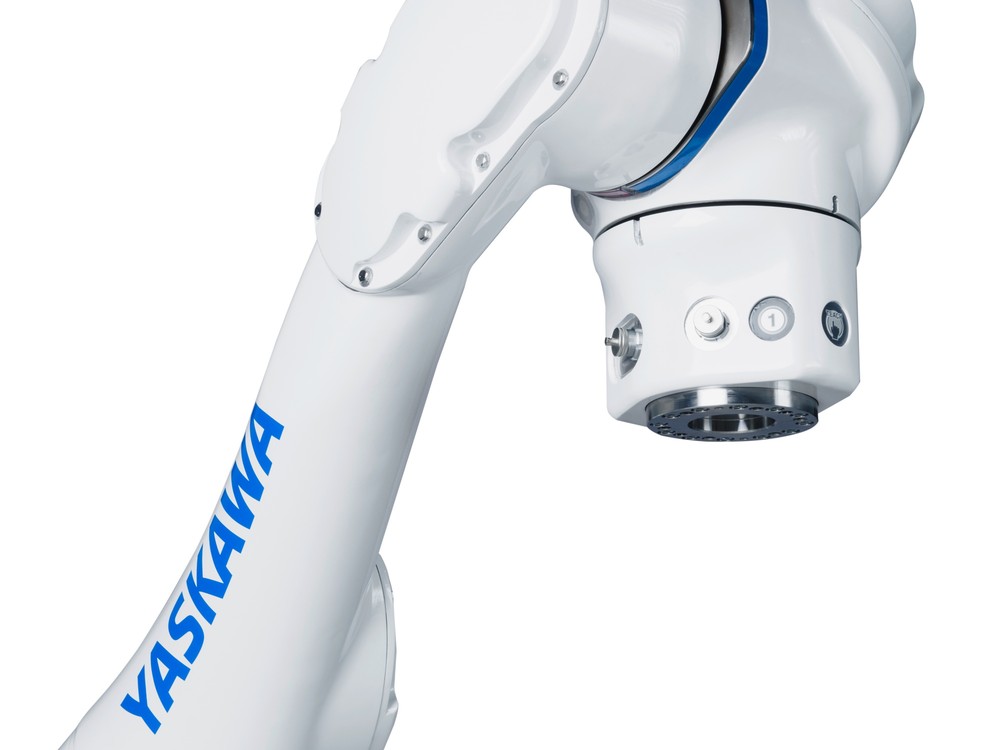
In addition to safety features, the design of the HC20DT – like that of the HC10DT – emphasizes user-friendly operation. Thanks to six integrated torque sensors and the monitoring and evaluation of external forces, the robot arm can be guided and programmed directly by hand (DT stands for "Direct Teach"). This results in significant time savings when creating robot programs. The "MOVE," "TEACH," and "TOOL UTILITY" buttons mounted on the robot's flange are used for programming. The new MOTOMAN HC20DT can also be easily programmed and used in conjunction with the user-friendly and modern Smart Pendant programming unit or the conventional manual unit (Teach Pendant).
In addition to the HC20DT, four other HRC (Human-Robot Collaboration) compatible robot models are available in the Yaskawa range: HC10, HC10DT, HC10DT IP67 and the HC10DTF for the food industry.